 Little Artbook
How to Declutter Kids' Artwork Without Feeling Guilty (A Simple 3-Step System)
Every parent hits the same wall around age three: your child comes home from preschool with five fresh crayon drawings, two finger paintings, and a paper-plate jellyfish—every single week. Within a year, kitchen counters, drawers, and closet bins are overflowing.
Throwing them away feels awful, as if you are tossing a piece of their childhood into the recycling bin. Keeping every scrap forever turns your home into a paper warehouse. The good news: children care far more that you admired their creation in the moment than that the physical scrap sits unseen in a garage bin for 15 years.
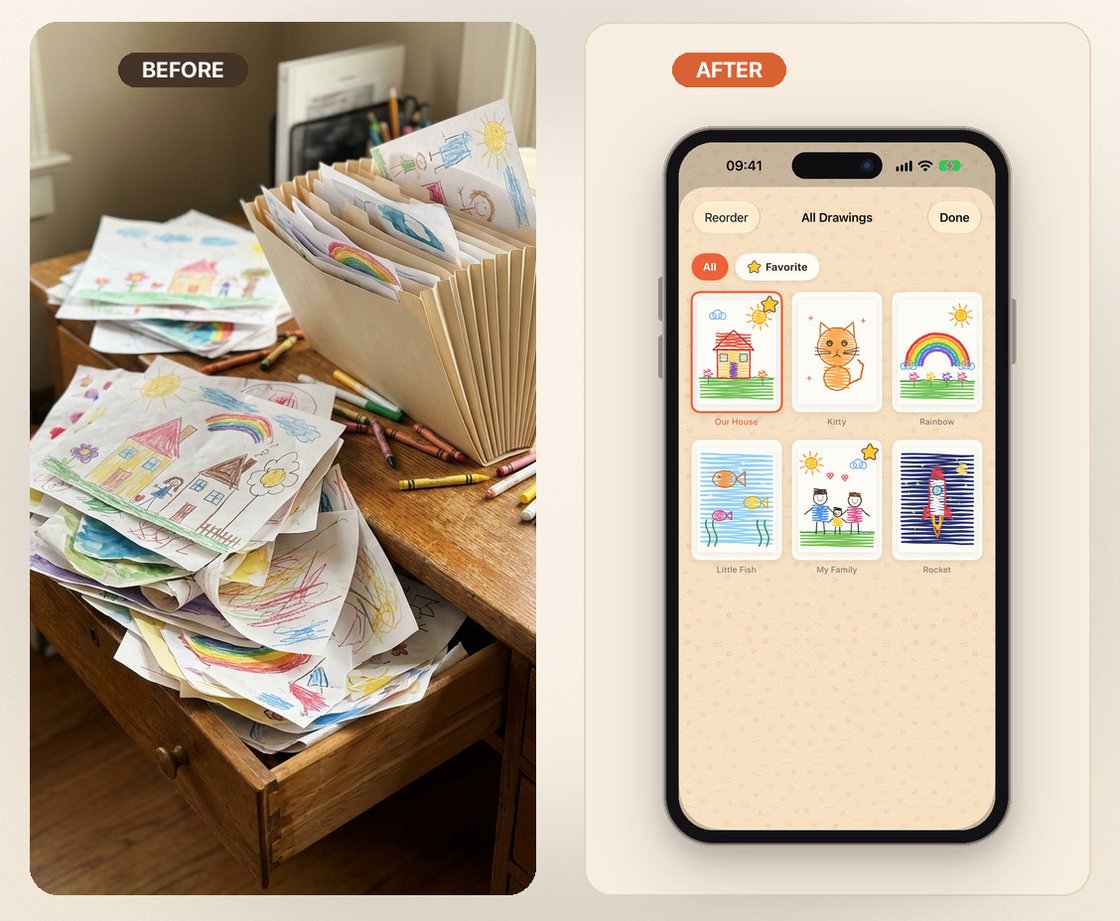
The 3-Step Sunday-Night Kids Art System
Instead of waiting until the end of the school year to face 400 wrinkled papers, set aside 5 minutes every Sunday evening and run this simple 3-step loop:
Capture the Drawing — and the Story Behind It
Before any paper leaves the table, scan the week's drawings into a dedicated digital artbook (separate from your everyday camera roll so they never disappear between grocery lists and screenshots).
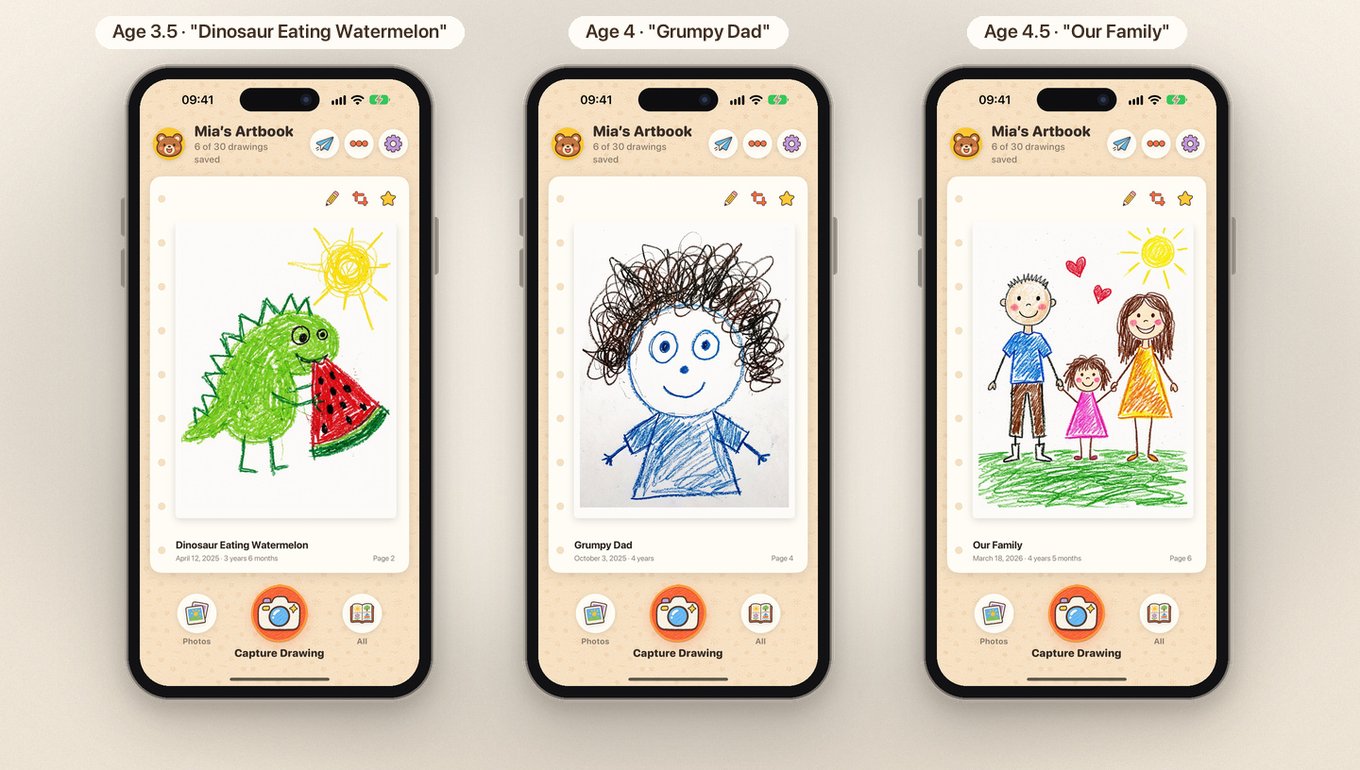
The secret step most parents skip: Ask your child to tell you what they drew and record a 15–60 second voice note right beside the drawing. Two years from now, you might not remember why there is a tiny purple triangle next to Dad's head—hearing their 4-year-old voice explain it is pure magic.
In Little Artbook, auto paper-edge cropping straightens crooked tabletop shots in 2 seconds, reversible Paper Brightening clears dim yellow shadows without washing out crayon colors, and your child's exact age (e.g. 3 years 6 months) is logged automatically.
Display Just 2–3 Rotating Favorites on the Wall
Hang two or three front-opening oak frames (the magnetic hinged kind that store 30–50 sheets inside) in a hallway or playroom. Each week, let your child swap their favorite new masterpiece to the front.
This gives your child genuine pride seeing their art treated like a real museum exhibit—while keeping your fridge doors and kitchen counters completely calm.
Let the Paper Stack Go — Completely Guilt-Free
Once every drawing is archived at full clarity (and backed up in your private iCloud), set aside only the rare tactile keepsakes worth holding physically—like handprint paintings or a first self-portrait—in one slim binder per school year. Everything else can go straight into the recycling bin after bedtime with zero guilt.
Quick Decision Matrix: Keep, Digitize, or Recycle?
| Type of Artwork | Recommended Action | Why It Works |
|---|---|---|
| Everyday crayon & marker drawings | Scan + voice note → Recycle paper | Digital copies stay crisp, searchable by age, and take zero shelf space. |
| Milestone pieces (first family portrait, first time writing their name) | Scan + keep in 1 slim yearly binder | Limits physical storage to ~10–15 meaningful sheets per year. |
| Bulky 3D crafts & pasta collages | Photo with child holding it → Display 1 week → Recycle | Preserves the joy and scale without collecting dust or crumbling glue. |
| Quick worksheets & coloring-book pages | Praise in the moment → Recycle right away | No need to archive mass-printed worksheets unless they have a hilarious note. |
Bonus Tip: Turn a Year of Art into a DIY Keepsake Book
At the end of the year, instead of spending $100+ on subscription printing services (see our 2026 Artkive Alternatives comparison), export a clean printable A4 PDF album from your favorite starred pieces and print it at home or a local print shop as a grandparent gift.
Frequently Asked Questions
How do you throw away kids' drawings without feeling guilty?
The guilt comes from feeling like you are erasing a memory, not from losing a piece of construction paper. Once you scan each drawing at high clarity—and record your child's exact age plus a quick voice note of them explaining it—you have preserved the real memory forever, making it much easier to recycle the excess paper calmly.
How much of my child's physical artwork should I actually keep?
A sustainable rule for most families is keeping 2 to 3 rotating favorites on display in front-opening wall frames, plus at most 10 to 15 irreplaceable physical pieces per school year (such as handprint crafts or first self-portraits) in one flat keepsake binder—and digitizing everything else.
What should I do with bulky 3D school crafts and pasta art?
Let your child hold their 3D craft proudly for a quick photo—or place it on a neutral tabletop in daylight—archive it inside your digital artbook with a short voice clip of how they made it, display it on a shelf for a week, and then recycle it once the excitement naturally passes.
Should I let my child see me recycle their drawings?
With toddlers and preschoolers, it is usually gentler to archive the stack together first so they feel celebrated, and handle the paper recycling later after bedtime. With older elementary kids, you can invite them to act as museum curator and pick their favorite 2 pieces for the wall frames while the rest go into their digital artbook.
Build Your Child's Digital Artbook in 2 Minutes
Start free with 30 drawings and 3 voice stories on iPhone & iPad—zero ads, no account needed, and a 7-day free trial on Yearly Premium.
Download Little Artbook on App Store